By Rei°
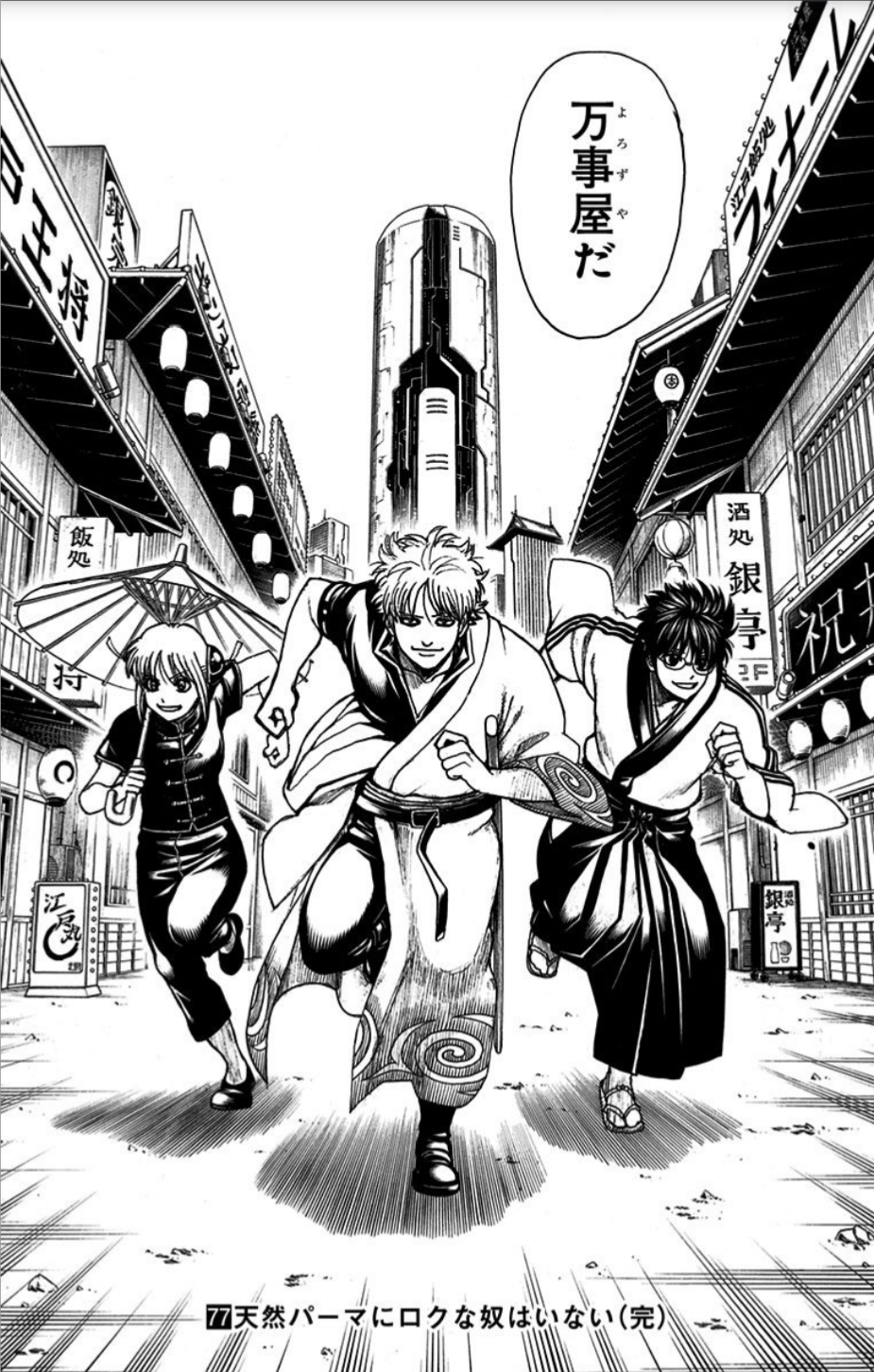
Among its many strong elements that makes the series stand out in Shonen Jump and the world of manga as a whole, one thing that adds to the magnificence of Gintama as a work of fiction, is the overall story conclusion, and everything that led to it.
To begin, the first notable factor about Gintama is that it’s an episodic structured series, that is driven by its unique set of characters that fill different purposes in the story, be it comedic, dramatic, or serious. The advantage of using an episodic, character driven formula, grants Sorachi the freedom to focus on characters of both major and minor roles, develop them through highly comedic, yet subtly realistic interactions that helps a character to slowly evolve, simultaneously showing the author’s brilliance in mixing lightheartedness and seriousness at any time, and his unique execution of character dialogues filled with clever Japanese wordplay and manzai style of comedy, all while building the universe with its lore and themes. Through all this, a strong attachment to the cast in its entirety is created, leaving the reader with little to no feeling of dissatisfaction toward the characters, their development, and the role these each play within the narrative.
The reason why this became advantageous for the conclusion is that, when the story switches from its episodic structure to a more plot driven one for its final act, the character focus is also diminished, and is primarily on the ones who have direct ties to the central events of the story. For this to work properly and to reach the desired conclusion, Sorachi cleverly broke down the final act into four different arcs, with each of them focusing on specific events, the Yorozuya + a specific set of characters, which also shows that his character centered formula he used when the story was still more episodic, is still present in this new traditional style he’s moved onto.
The story of the Shogun Assassination arc serves as the beginning of the end, the start of the countdown to apocalypse, finally putting into motion the schemes of Takasugi that have been foreshadowed as early as the latter’s first story appearance, alongside the Hitotsubashi’s plan of taking down the Tokugawa shogunate and take over the nation. The ninja side of the Gintama universe (which is what the entire story arc is centered around), becomes highly relevant, introducing new characters like Momochi Rappa, further fleshing out the Oniwaban’s central characters, Sacchan and Zenzou, their past ties to the most central character of the arc, Shigeshige, their ties to the Bakufu, and additionally giving them major roles to play in these tumultuous events, together with other Bakufu connected characters like the Shinsengumi. Then come the main events of the arcs, that is, the confrontations between Gintoki and Takasugi, and the one between Kagura and Kamui, which also set the stage for future events.
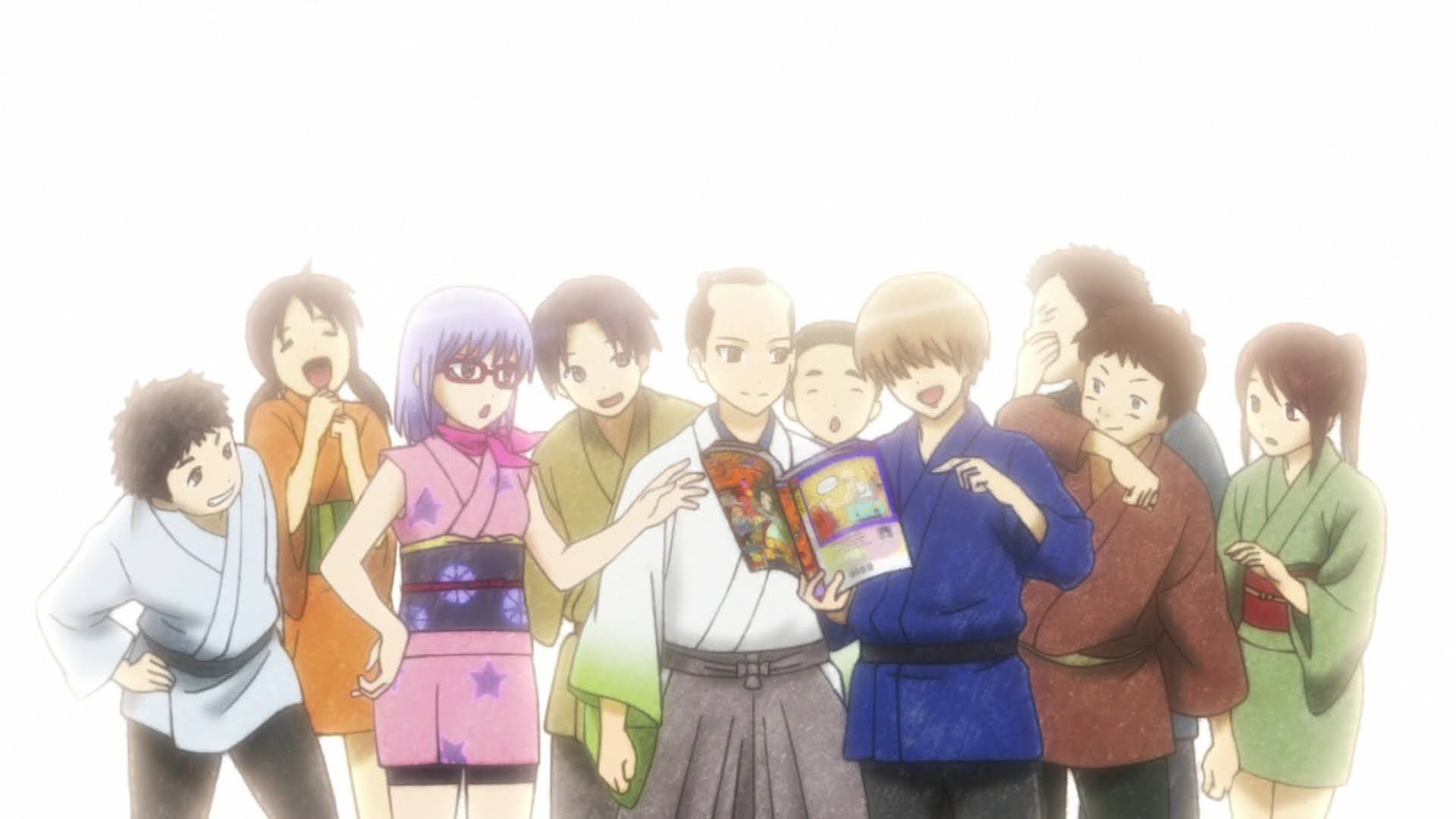
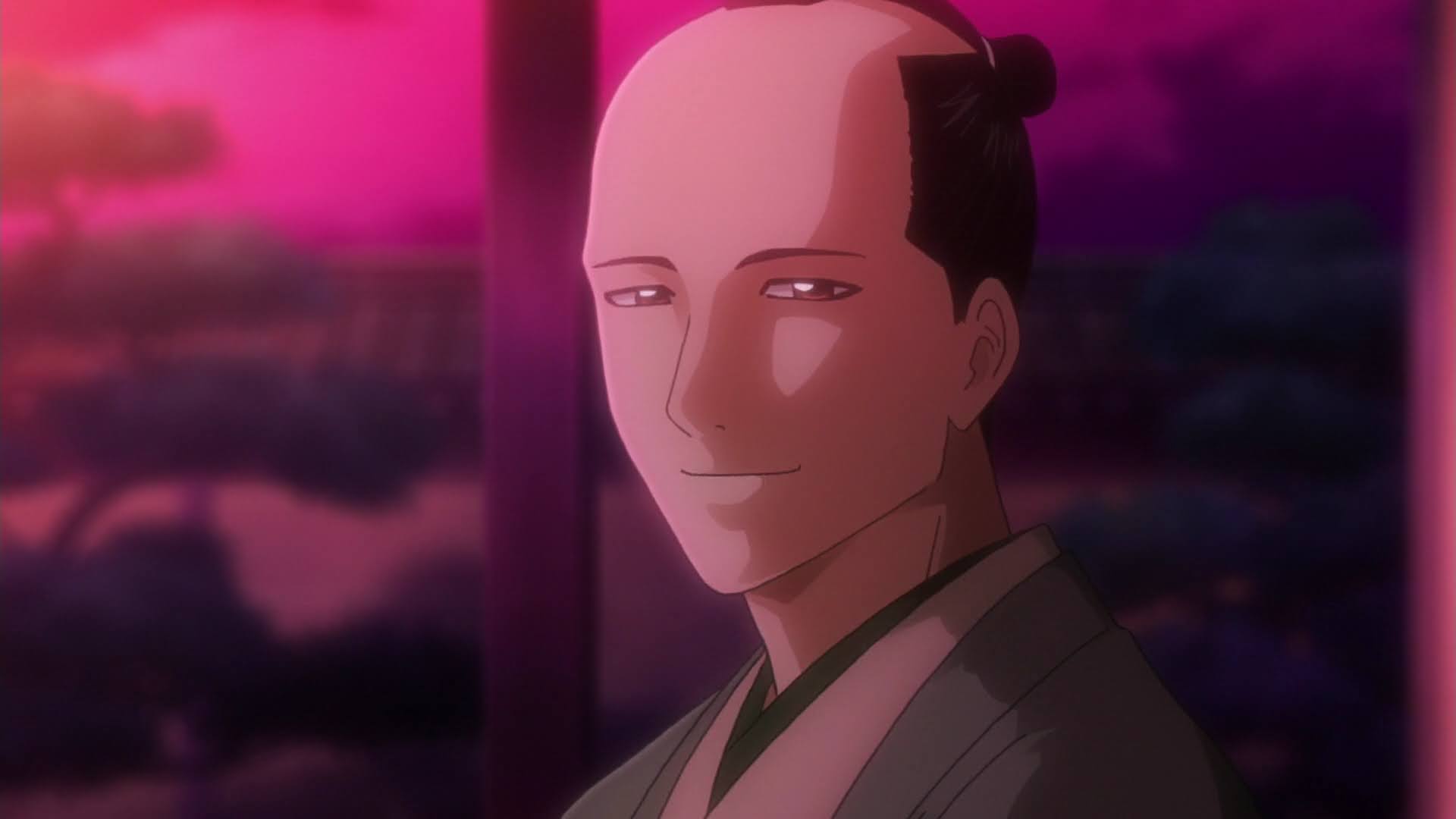
Farewell Shinsengumi continues from where Shogun Assassination left off, also focusing primarily on the Shinsengumi & the Mimawarigumi, their history and resolving their conflict. Katsura and his Joui faction enter the final act as well, to join forces with the Shinsengumi. And lastly, Utsuro, who was built up via Shouyo throughout the story, is introduced and takes the position as the overarching main antagonist in the story, together with Oboro who appeared at the end of the previous arc. As the name itself implies, the story here wraps up the arc of the Shinsengumi, with the end giving a sense of story conclusion, which serves as a preview to what the overall finale of Gintama might look like.
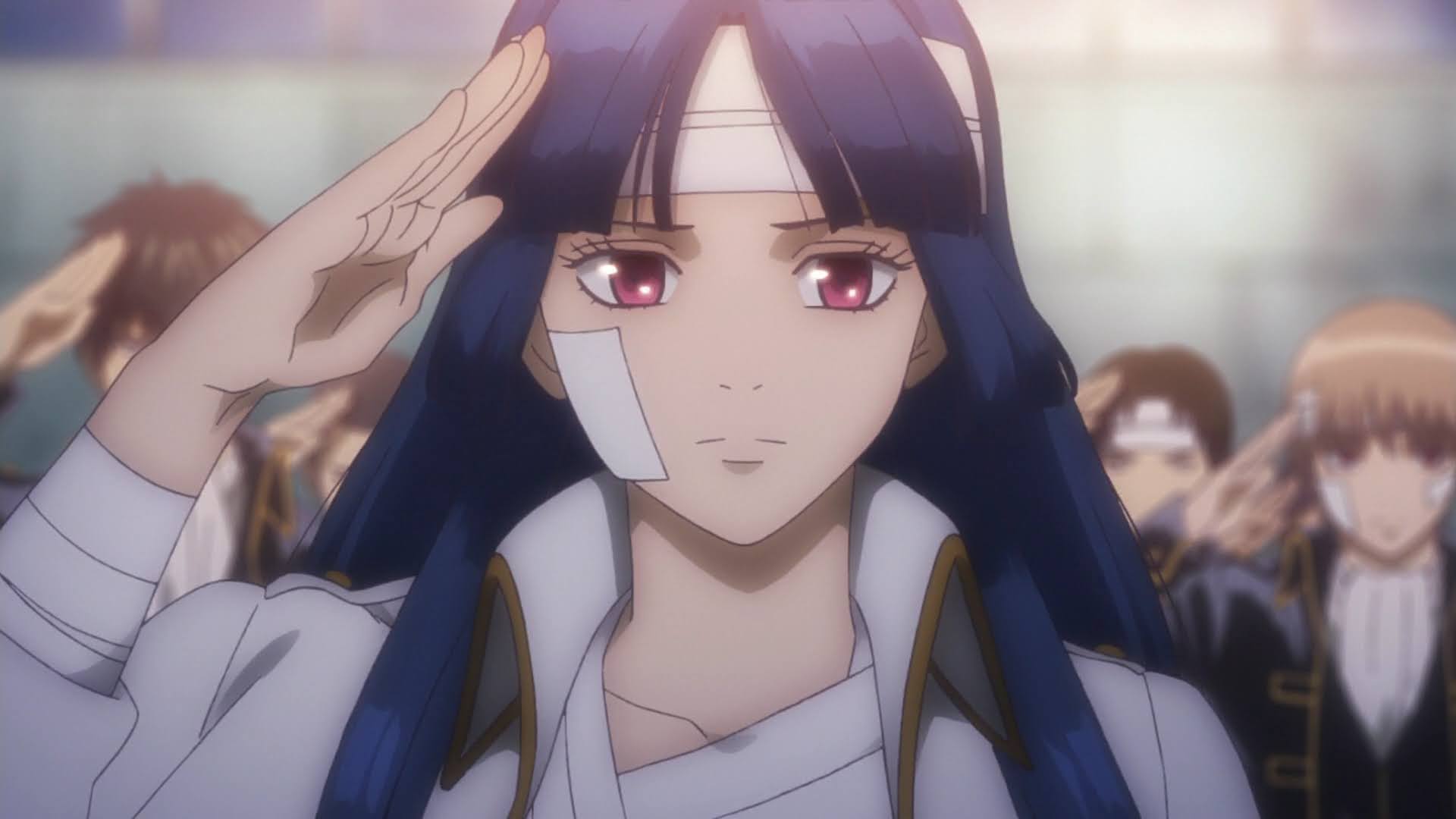

Rakuyou Decisive Battle continues from where Farewell Shinsengumi left off, and focuses on Kagura’s family plotline, reunites the Joui 4, explores Oboro and Utsuro’s characters, brings back the plot point of the Altana into the story, where Sorachi utilizes a more traditional battle shonen style for the execution of the arc. As it was with the previous two story arcs, Rakuyou managed to achieve what it had to achieve with its character roster, and finally set the stage for the overall final arc of the story.

Tackling the more central aspects of the plot with these three arcs, Sorachi goes back to bring the rest of the cast who was absent during the the previous three arcs, and once again gains the freedom to focus on them in a larger story arc like Silver Soul, which also brings back the bizarre comedic atmosphere that Gintama is known for, and blends it with the seriousness that has been clouded the story ever since Shogun Assassination. With Silver Soul, not only do all the old characters get to play their respective role in the arc, but it also wraps up other character arcs, like Kyuubei’s, but it also deals with remaining arcs of characters with secondary plot relevance, like the Kiheitai, and masterfully at that.
With all this, Sorachi still decides to break the trope of “final war arc”, and extended Silver Soul with the story arc’s aftermath, which serves as the final of the final arcs. Now with all other character arcs wrapped up, and every old character being able to play a part of the never-ending apocalyptic battle, the story can now conclude by focusing on the most important character in the entirety of Gintama, i.e. Gintoki himself, and wrap up his story. Wrapping up Gintoki’s arc also means wrapping up the story of his two halves, the Yorozuya and Shoka Shonjuku, and most importantly, the story of Gintama itself. This helps in giving the reader the strongest emotional payoff, and a strong feeling of satisfaction.
If the end of this story is so impactful, and is one of the best ever made, it’s because of how the author structured the series in such a unique style, without deviating from this formula even when the story was in its more critical moments. He created a one of a kind shonen manga that does nothing but does everything at the same time, and achieves its goals like no other.
 Yorozuya Shinigami